
November 3rd week - Is Voluntary Retirement Really a Voluntary Choice?
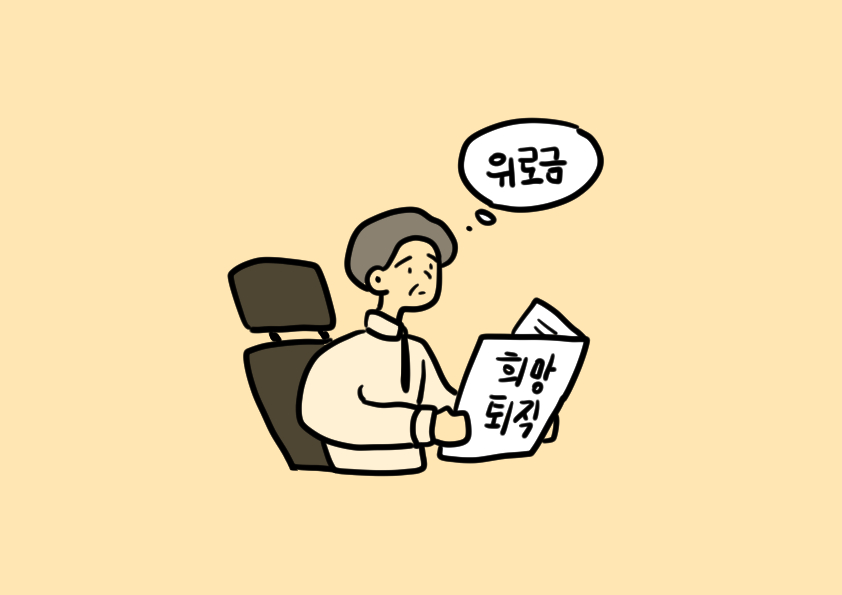
Is Voluntary Retirement Really a
Voluntary Choice?
Bongsoo Jung, Labor Attorney / KangNam Labor Law Firm
I. Introduction
“If you apply for this voluntary
retirement program, we will provide a retirement incentive payment. If you do
not apply, we cannot guarantee what will happen.” What choice should an
employee make after hearing these words following a company briefing on restructuring?
It is not easy to decide whether to accept the incentive payment and make a
fresh start or to protect the right to continue working.
When the economy becomes difficult
and business structures change, companies seek to reduce their workforce. However,
dismissal for managerial reasons, in which employees are let go solely because
of the company’s circumstances, is subject to strict requirements. This is why
many companies first offer voluntary retirement. As its name suggests, it is a
program under which employees retire voluntarily. In practice, however, the
boundary between a “voluntary choice” and “de facto pressure to resign” becomes
an important issue.
A voluntary retirement program is
not, in itself, unlawful. However, the mere fact that a company uses the name
“voluntary retirement” does not mean that all legal issues disappear. This
article examines what employees and companies should each check.
II. Implementation of Voluntary
Retirement
1. The Concept of Voluntary Retirement: An Offer and Agreement Are
Different from Dismissal
Voluntary retirement is a method of
ending the employment relationship by mutual agreement, under which a company
offers certain compensation and terms, an employee reviews them and applies,
and the company approves the application. It resembles a recommended
resignation, in which an employer encourages a particular individual to resign,
but voluntary retirement is often operated as a program that accepts
applications over a specified period.
The key is the employee’s free will.
Employees must be able to decline even after hearing the explanation, and they
must be provided with the time and information needed to decide whether to
apply. The mere appearance of a signed resignation letter does not necessarily
establish a genuine intention to resign. If resignation was effectively forced
through repeated threats, implied disadvantages, or compulsory interviews, its
actual legal nature may be disputed.
2. What Is the Difference Between Voluntary Retirement and Redundancy Dismissal?
A redundancy dismissal is a dismissal
in which an employer terminates the employment relationship for managerial
reasons regardless of the employee’s wishes. Under Article 24 of the Labor
Standards Act, it requires an urgent managerial necessity, efforts to avoid
dismissal, reasonable and fair selection criteria, and notification to and
good-faith consultation with employee representatives at least 50 days before
the dismissal date. Dismissals exceeding a certain scale are also subject to a
separate reporting obligation.
By contrast, voluntary retirement
based on a genuine agreement does not itself constitute a redundancy dismissal
under Article 24. However, if the recruitment of voluntary retirees is combined
with a process of preparing for or attempting to avoid redundancy dismissals,
the legality of its actual operation and the manner in which it is explained to
employees must be examined separately. The actual process and the intentions of
the parties matter more than the label.
3. Planning Stage: Issues Both Companies and Employees Can Easily Overlook
Companies need to clearly determine
in advance the scope of eligible employees, application period, whether
applications are subject to approval, compensation criteria, retirement date,
reemployment assistance, and the point until which an application may be
withdrawn. Companies are not necessarily required to approve every application,
but unclear approval criteria or the exclusion of particular individuals must
not lead to discrimination. They should also consider the problem of adverse
selection, in which highly capable employees leave first.
Employees are safer not submitting
resignation letters in advance based solely on the company’s briefing
materials. In addition to the amount of the incentive payment, they should
review unpaid wages, unused annual leave allowances, statutory retirement
benefits, performance bonuses, stock options and equity-based compensation,
non-compete and confidentiality clauses, and post-retirement benefits.
4. Retirement Incentive Payments: They Must Be Distinguished from Statutory
Retirement Benefits
As a general rule, a retirement
incentive payment is not an amount uniformly prescribed by law for every
employee who accepts voluntary retirement. Eligibility and amounts may vary
according to the company’s program, rules of employment, collective bargaining
agreement, or individual agreement. By contrast, statutory retirement benefits
arise when the requirements of the relevant law are satisfied. Employees must
therefore check whether the wording states that the “total incentive payment
includes statutory severance pay” or that it is “paid separately from statutory
severance pay.”
For example, if an employee earning
KRW 4 million per month is offered a special incentive payment equivalent to 12
months’ salary, the amount is KRW 48 million. However, this does not mean that
statutory severance pay, payment for unused annual leave, and unpaid bonuses
are all settled. Taxes may also differ depending on the legal nature of each payment,
so employees should confirm the net amount they will actually receive.
5. When Making an Offer to an Employee: Preserve the Freedom to Refuse
It is risky to say that an employee
who refuses voluntary retirement will automatically be dismissed for redundancy.
A redundancy dismissal must actually satisfy the statutory requirements, and
the employees to be dismissed must be selected according to fair criteria. A
categorical explanation such as “If you refuse voluntary retirement, you will
definitely be dismissed without receiving a single won in incentive payments”
may give employees incorrect information and undermine their freedom to make
decisions.
It is advisable for HR personnel to
keep objective records of interview discussions and proposed terms, and to
provide sufficient time for consideration and opportunities to ask questions.
They must not prepare resignation letters on employees’ behalf without their
consent or retaliate against employees in personnel matters merely because they
refused.
6. When Redundancy Dismissals Are Still Necessary After Voluntary
Retirement
Failing to reach the recruitment
target does not mean that the remaining employees can immediately be dismissed.
Companies must consider measures to avoid dismissal, such as reassignment, cost
reductions, and adjustments to recruitment. If they proceed with redundancy
dismissals, they must separately satisfy the requirements of Article 24 of the
Labor Standards Act. Clearly distinguishing voluntary retirement from
redundancy dismissal is the starting point for reducing distrust and disputes
among employees.
III. Matters to Consider in Voluntary
Retirement
1. A Single Document Can Change the Course of a Future Dispute
Applications and agreements should
specifically state the voluntary nature of the application, application and
approval dates, retirement date, the amount and payment date of each payment
item, its relationship to statutory retirement benefits, return of company
property, confidentiality obligations, and methods of consultation if a dispute
arises. A broad clause waiving “all claims” does not mean that its effect will
always be recognized without limitation. The individual rights involved and the
actual circumstances of the agreement must be examined.
2. Unemployment Benefits Are Not Paid Automatically
It is neither true that all employees
who take voluntary retirement receive job-seeking benefits nor that none of
them can receive such benefits. Eligibility is determined by considering the
insurance requirements, including the number of qualifying insured days under
employment insurance, the justifiability of the reason for leaving employment,
willingness and ability to work, and whether the individual engages in
reemployment activities. Leaving employment during workforce reductions arising
from the company’s managerial needs may be assessed differently from leaving
voluntarily for personal reasons.
Ordinary employees should check
requirements such as having at least 180 qualifying insured days in total
during the 18 months before leaving employment. In principle, job-seeking
benefits are calculated on the basis of 60% of the average wage before
separation, for a prescribed benefit period ranging from 120 to 270 days. Upper
and lower limits and the actual amount payable differ according to the
standards applicable on the separation date and prescribed working hours, so
employees should check with Employment24 or an Employment Center.
3. Life After Retirement Is Also Part of the Compensation Package
Sudden retirement affects both household
finances and self-esteem. If companies provide reemployment counseling,
vocational training, outplacement assistance, healthcare, and psychological
counseling, they can reduce anxieties that monetary compensation alone cannot
resolve. Employees should calculate their household’s fixed expenses, loan
repayment schedule, changes to health insurance eligibility, national pension
arrangements, and the expected period without employment before finding another
job.
4. Five Things Employees Should Check Before Signing a Resignation Letter
① Have I been informed that refusing
the offer does not mean I will be dismissed immediately?
② Have I calculated the incentive
payment, statutory severance pay, unpaid wages, and annual leave allowances
separately?
③ Will the reason for leaving
employment be accurately recorded in official documents, including the
employment separation confirmation?
④ Have I confirmed in writing the
payment dates, net amounts, equity compensation, and post-retirement
obligations?
⑤ Have I had sufficient time to
consider the offer and, if necessary, consulted an expert?
5. Practical Checklist for Companies
When preparing operating guidelines
for voluntary retirement, companies should address the business purpose and
expected number of retirees, eligibility criteria, potential discrimination,
relationships with internal rules and collective bargaining agreements,
informational materials for relevant employees, expressions that interviewers
must avoid, withdrawal of applications, personal information protection, and
record retention. In particular, expiration of fixed-term employment contracts,
retirement at the mandatory retirement age, and termination of executive
contracts have different legal structures from voluntary retirement and must be
examined separately.
IV. Conclusion
Voluntary retirement is not an easy
shortcut around redundancy dismissal. Rather, it is a system for reconciling a
company’s restructuring needs with employees’ right to choose through mutual
agreement. When properly implemented, employees can receive sufficient
compensation and prepare for new work, while companies can reorganize with
fewer conflicts. However, when it becomes pressure to leave without any real
choice, the advantages of the program disappear.
The questions employees need to ask
do not end with “How much is the incentive payment?” They must also ask, “Why
do I have to leave, what will happen if I refuse, and can I support myself
after retirement?” For companies, the more important question is not “How much
should we pay to make them leave?” but “Is this decision legally justified and
can we explain it to our employees?” The success of voluntary retirement
depends not on the number of applications, but on whether employees’ choices
have been respected.
| No | Title | Date | Access | File |
|---|---|---|---|---|
| November 3rd week - Is Voluntary Retirement Really a Voluntary Choice? N | 26.11.15 | 39 |
 
|
|
| 290 | November 2nd week - From Recruitment to Retirement: Assessing Age Discrimination and Available Remedies | 26.11.08 | 241 |
|
| 289 | October 4th week - The Unpaid Wages Case Involving 339 Election Campaign Workers | 26.10.25 | 1113 |
|
| 288 | October 3rd week - Is Paying a Higher Salary Enough? Understanding Korea’s Minimum Wage Law in 2026 | 26.10.20 | 1389 |
|
| 287 | October 2nd week - A Foreign Teacher’s Fight Against Unfair Dismissal | 26.10.10 | 1385 |
|
| 286 | October 1st week - Limitations and Exceptions to the Employment Period of Fixed-Term Employees | 26.10.04 | 1586 |
|
| 285 | September 5th week - Dismissal by a Foreign Parent Company and the Application of Korean Labor Law | 26.09.27 | 1644 |
|
| 284 | September 4th week - Freelancer or Employee? Substance Matters More Than the Contract | 26.09.20 | 1187 |
|
| 283 | September 3rd week - Cases Concerning the Validity of Disciplinary Procedures | 26.09.13 | 1089 |
|
| 282 | September 2nd week - Same Steel Mill, Different Conclusions: Criteria for Distinguishing In-House Subcontracting from Illegal Worker Dispatch | 26.09.06 | 1309 |
|
| 281 | September 1st week - Scope of Duties and Areas of Practice for Labor Attorneys (As of August 2026) | 26.08.30 | 1562 |
|
| 280 | August 4th week - Lockout: Requirements for a Lawful Lockout and Its Legal Effects | 26.08.22 | 1584 |
|
| 279 | August 3rd week - Criteria for Determining Ordinary Wages and Calculating Additional Pay - Changes and Practical Issues Following the 2024 Supreme Court En Banc Decisions- | 26.08.16 | 65031 |
|
| 278 | August 2nd week - Retirement Pension System (Revised Version Based on Laws and Regulations as of August 2026) | 26.08.09 | 2263 |
|
| 277 | August 1st week - Contractual Leave: Types and HR Considerations | 26.08.02 | 1828 |
|
| 276 | July 4th week - Occupational Lung Disease Recognized through an Epidemiological Investigation | 26.07.26 | 1800 |
|
| 275 | July 3rd week - A Restructuring Case: From a Redundancy Plan to a Voluntary Retirement | 26.07.18 | 2407 |
|
| 274 | July 2nd week - Justification for Dismissal Due to Poor Sales Performance | 26.07.12 | 2832 |
|
| 273 | July 1st week - A Case Study on Collective Bargaining by a University Cleaning Workers’ Union and Its Practical Implications for Labor-Management Relations in 2026 | 26.07.05 | 2135 |
|
| 272 | June 4th week - Blind Spots in Labor Law Protection for Native English Instructors (as of 2026) | 26.06.28 | 2018 |
|