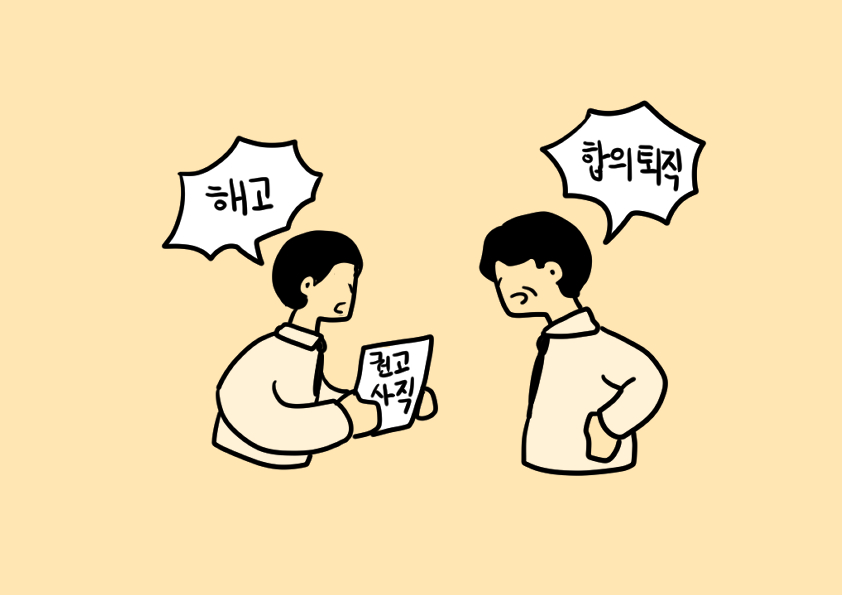
A Restructuring Case: From a Redundancy
Plan to a Voluntary Retirement
Bongsoo Jung (Labor attorney, KangNam Labor Law
Firm)
I. Introduction
When experiencing difficulties many companies, viewing
labor as one of their highest expenses, prefer to reduce it as a first reaction,
but arbitrary lay-offs can cause significant conflict and legal disputes between
the company and its workers because their keeping job is a matter of their survival.
Therefore, using a lay-off as a way of cutting costs should be the final step. In
a lay-off situation, office workers usually have no problem getting hired elsewhere
and tend to readily accept when they are asked for voluntary resignation in
return for reasonable financial compensation, while production workers will
desperately object to a lay-off because it is almost impossible for them to
find similar jobs with equivalent wage levels. Accordingly, laying off
production workers is extremely difficult to implement due to persistent
objections from the related labor union as well as the workers involved. An
example of this, showing how difficult lay-offs can be for both management and
labor, is the situation at SSangyong Motor Company where recently, more than 300
production workers committed suicide as a result of being laid-off.
The following case demonstrates a lay-off that this
writer provided legal advice for and which took place from December 2022 to
August 2023 and that was reasonably implemented despite ‘difficult situations’
while doing so. Here, ‘difficult situations’ means that those subject to
dismissal were production workers, that there was a labor union (hereinafter
referred to as “the Labor Union”) which consisted of all production workers,
and that the Collective Agreement contained an article which restricted lay-offs.
II. Major Disputes at Each Implementation Stage and
their Resolution
1. Planning stage
(1) I had taken a project for lay-offs within an
automobile parts production company (hereinafter referred to as “the Company”),
in December of 2022. This company was foreign-owned and had suffered continuous
deficits since 2018, as it could not get new competitive automobile products from
its American headquarters company, and expected to see a continued deficit in
the near future. In order to reduce this ever-growing deficit, the Company had
to reduce its work force by a minimum of 30%. The HR director of the Asia-Pacific
Regional Head Office was of the opinion that the Company would close its doors
if it could not implement these lay-offs in time.
(2) When designing its lay-off plan, the Company had to
reduce personnel through use of a voluntary early retirement system based upon a
managerial dismissal schedule. As job security was part of the Collective Agreement
with the Labor Union, it was considerably difficult to implement any arbitrary lay-off.
The job security agreement stipulated that: “When the Company
intends to reduce personnel due to urgent business reasons, it shall inform the
Labor Union of the reason(s) 60 days prior to implementing dismissals and reach
agreement with the Labor Union on the criteria and procedures for determining those
who shall be subject to dismissal, as well as provisions for ERP bonuses.
Provided, that the order of priority shall begin with voluntary applicants and most
recently-employed.” The conditions in a Collective Agreement that a company
shall “reach an agreement with the Labor Union” and “the order of priority shall
begin with ……most recently-employed” can be the biggest barriers in the process
of managerial dismissal. The reason for this is because these conditions frame
the essential procedures required by law pertaining to managerial dismissal which
the Company must follow. As for the ERP bonus, reaching an agreement is likely
to be difficult as the Company expects a lower amount while the Labor Union may
insist on the maximum amount. So, if the Company had sufficiently consulted
with the Labor Union regarding the level of the ERP bonus, it would be no
problem for the Company to determine unilaterally an appropriate level for an
ERP bonus. The other two conditions were that “the Company shall reach agreement
with the Labor Union on the criteria…… for determining those who shall be subject
to dismissal,” and “if the two parties cannot reach such agreement, the Company
shall adhere to procedures that choose voluntary applicants and recent
employees first”. This means that the Company has to respect seniority and
select most-recent employees as those subject to managerial dismissal in cases
where there is no agreement on the matter. Accordingly, in order to deal with
the restrictions on managerial dismissal, both parties are required to decide
what would be an appropriate ERP bonus through consultation, and work hard to
reach an agreement on fair criteria for dismissal. In the absence of this, the Company
will have to dismiss based simply on seniority.
2. Negotiation stages with the Labor Union
(1) After announcing the plan for managerial dismissal in
January 2023, the Company began negotiations with the Labor Union regarding
efforts to implement dismissals and selection procedures for those subject to
dismissal as required by the Labor Standards Act, Article (24), “Dismissal for Managerial
Reasons”. When the Company announced its intention to implement managerial
dismissal, the Labor Union responded that it would cooperate with the Company
if the Company would pay two years’ average wages as an ERP bonus. To this, the
Company proposed an ERP bonus of 6 months, after getting approval from the
American Head Office, as it was running out of sufficient funds due to the long-term
deficit accumulated over the past years. The Labor Union rejected such a low
ERP bonus, and held a special ceremony where union officers shaved their heads
and put up printed banners objecting to the managerial dismissal.
(2) The Company made efforts to negotiate with the Labor
Union several times from March to May of 2023, but could not reach an agreement
on ERP bonus levels or who would be subject to managerial dismissal. The Labor
Union became subject to increasing pressure as they were aware of the typical
tendency of foreign companies to close their businesses if they could not make
money due to continuous deficits, and gradually started to compromise regarding
lay-offs. On July 13, 2023, the Labor Union demanded an increase in the ERP
bonus, explaining that the average wages for six months could be an amount
equivalent to the average wages for only four months two years ago as they had
not done much overtime lately. The Company accepted the Union’s explanation as
reasonable and received special approval for an increase in the ERP bonus up to
8 months for production workers, while maintaining the 6 months’ average wages
for office workers.
(3) The Company
agreed with the Labor Union on the ERP bonus levels and the implementation of a
Voluntary Retirement Program, but the Labor Union insisted that the Company
should implement the managerial dismissal beginning with the most
recently-employed, as there had been no agreement on those. The Company
proposed that it should determine those subject to dismissal based on quality
of performance and number of accidents over the past three years. While
negotiating this matter, the Company instigated a Voluntary Early Retirement Program
by posting the information within the company premises, but no production
workers applied for this while only a few office workers applied. The Company
realized that it would be difficult to effectively reduce the number of
employees through the Voluntary Early Retirement Program, and so informed the Labor
Union that it was obliged to implement managerial dismissals with the
recently-employed to be dismissed first. Based on this information, the Labor
Union feared that the Company would implement another lay-off plan next year if
it conducted managerial dismissals based on the principle that the most
recently-employed were to be dismissed first, because the Company would not be
able to reduce its labor costs and thereby improve the competitiveness of its
products. Therefore, the Labor Union responded to the Company that it would
accept the Company’s criteria for those subject to dismissal if the Company would
accept the two following conditions: (1) the Company would reduce the number of
employees to be dismissed and (2) would implement the Voluntary Early Retirement
Program one time more. To this, the Company agreed to reduce the dismissals
from the original 60 production workers and 14 office workers to 40 production
workers and 8 office workers. In addition, the Company implemented the Voluntary
Early Retirement Program from July 13 to July 25, 2023. During this period, the
target number of office workers applied, but only 10 production workers, leaving
30 still to be dismissed.
3. Implementation stage
(1) On July 25, 2023 the Company announced the managerial
dismissals, informing the 30 production workers selected by following the
criteria of those subject to dismissal that the Company and the Labor Union
agreed upon, and put them on paid leave. In line with this, the Company
informed the Labor Office of the plan for managerial dismissal. In addition,
the Company stipulated in its dismissal letter that the affected persons would be
able to apply for a Voluntary Early Retirement Package at any time prior to his/her
termination date. Although the 30 production workers who received the advance
notice of dismissal were supposed to wait at home, they came to the Company
premises and occupied the Labor Union office. They then threatened the Labor
Union Chairman, stating that he must hold an impeachment vote against union
officers, and claiming that the Labor Union chairman’s decision was null and
void as it simply supported the Company’s unilateral view. The dismissed
workers, supported by former Labor Union officers led action, to impeach the current
Union officers. The Labor Union Chairman feared violence from the dismissed
workers and hid for three days, after which he returned and promised to hold an
impeachment vote at the General Meeting.
(2) Dismissed workers came to the Company and occupied
the Labor Union office every day, from the day that they received their advance
dismissal notices to the day of the impeachment vote, and picketed the main
entrance gate, during times when workers were arriving and departing,
protesting what they called the mutual conspiracy between the Company and the Labor
Union. The dismissed employees were supposed to wait at home, but the Company could
not control their collective action of coming to the office. The Company called
the police and asked for their support after explaining the situation, but the
police replied that they were not allowed to intervene in labor disputes, and
if the dismissed workers intended to visit the Labor Union office, the police
could not prevent their visiting. Eventually, the Company realized it had to
block them from coming onto company premises on its own, and so looked into
acquiring the services of a Security Guard Agency. The service could cost 540 million won for one month,
which would be too expensive for the Company to accept under its current financial
situation. Therefore, the Company could do nothing but wait and watch the
dispute from the sidelines.
4. Concluding stage
(1) During the labor-labor disputes, the Company
continuously recommended to the dismissed workers that they apply for the Voluntary
Early Retirement Package and resign through their department heads and Human
Resources managers. Thanks to these efforts, an additional 5 workers applied
for this voluntary ERP-based resignation. The remaining dismissed workers expected
that when the current union officials were impeached at the Labor Union’s
General Meeting, the new labor officers would renegotiate with the Company and
cancel the managerial dismissals. On August 8, 2023 there was an impeachment
vote against the current union officers and the result was 42 in favor of
impeachment and 58 against, rejecting the discharge of the current officials. After
this result, the 25 remaining dismissed workers all applied for voluntary retirement,
believing that they could not win an unfair dismissal case as long as the
current Labor Union officers cooperated with the Company.
(2) All 30 production workers eventually resigned with a
voluntary ERP bonus package and the Company successfully avoided the managerial
dismissals. This prevents any potential labor disputes related to legal claims,
and furthermore was very fortunate in that the Company did not cause further
pain to either the remaining workers or the resigned workers.
III. Evaluation of the Lay-off
This lay-off of production workers was well-implemented through
the appropriate use of managerial dismissal as per the Labor Standards Act and
the Voluntary Early Retirement Program in order to cope with managerial
difficulties the Company faced. At first, the Company followed Article 24
(Restrictions on Dismissal for Business Reasons), which contains: 1) urgent
necessity in relation to the business; 2) efforts made to avoid dismissal; 3)
fair criteria for the selection of those persons subject to dismissal; and 4) consulting
in good faith with the Labor Union regarding efforts to avoid dismissals and
fair criteria for the selection of those persons subject to dismissal. The
above case showed that the Company satisfied the legal requirements, which are
to exert effort to avoid dismissals through the Voluntary Early Retirement Program.
Furthermore, the Company compared other companies’ ERP bonus levels with the Company’s
ability to pay, while setting up the ERP bonuses, and negotiated with the Labor
Union in good faith by responding to the workers’ demands, and then resolved
the Company’s ERP bonus levels based upon mutual agreement. In particular, while
the selection of those subject to dismissal was previously determined as “those
most recently employed” in the Collective Agreement, the employer persuaded the
Labor Union to abandon the order of recent employment and to accept the result
of personnel evaluations for the past three years. Throughout this lay-off
process, the Labor Union and the Company showed the desired labor-management
partnership which resulted in a win-win situation during difficult times.









 Connect to the app